From the only original and legitimate Battlestar Wiki: the free-as-in-beer, non-corporate, open-content encyclopedia, analytical reference, and episode guide on all things Battlestar Galactica. Accept neither subpar substitutes nor subpar clones.
The '''Viper''' is the Colonial space fighter used in both the [[Battlestar Galactica (TOS)|Original Series]] and [[Battlestar Galactica (RDM)|Re-imagined Series]].
{{DisambigTab
|tab1=Original Series
[[Viper (RDM)]] summarizes the two Viper models seen in the Re-imagined Series.
|subtab1_1=Viper (TOS)
:See [[Viper Mark II]] for detailed information on the older Viper model.
|subtab1_2=Starchaser
:See [[Viper Mark VII]] for detailed information on the newer, computerized Viper model.
|subtab1_3=sixth-millennium starfighter
|tab2=Galactica 1980
[[Viper (TOS)]] details the Viper seen in the Original Series and in the spin-off series, ''[[Galactica 1980]]''.
|subtab2_1=Viper (1980)
|tab3=Re-imagined Series
[[Viper (Video Game)]] has information on the fighter seen in the [[Video Game|2003 video game]].
|subtab3_1=Viper (RDM)
|subtab3_2=Viper Mark II
See [http://www.battlestarwiki.org/wiki/Category:Vipers|the Vipers category] for a list of all Vipers mentioned in the series.
|subtab3_3=Viper Mark III
|subtab3_4=Viper Mark VII
{{disambig}}
|subtab3_5=List of Vipers
|tab4=Separate Continuity
|subtab4_1=Viper (RH)
|subtab4_2=Scarlet-class Viper
|subtab4_3=Azure-class Viper
|subtab4_4=Viper (TOS alternate)
|subtab4_5=Temporal Viper
|subtab4_6=Viper Gunship
|subtab4_7=Stealth Viper
|subtab4_8=Viper (1880)
|subtab4_9=Viper (2003 Video Game)}}
Latest revision as of 18:56, 13 October 2025
NOTE: This is a disambiguation page — a navigational aid which lists other pages that might otherwise share the same title If an article link referred you here, you might want to go back and fix it to point directly to the intended page.
This is a disambiguation page — a navigational aid which lists other pages that might otherwise share the same title. If an article link referred you here, you might want to go back and fix it to point directly to the intended page. Also, if you wanted to search for the term "Viper", click here.
The Colonial Viper is the primary space superiority fighter and attack craft deployed by the Colonial military. Capable of both atmospheric and long-range spacial flight, the Viper is a single-pilot craft with two-forward mounted laser-torpedo guns as standard.
The Viper is capable of rapid acceleration in the form of a "turbo boost" feature, which results in greater fuel usage (TOS: "The Living Legend, Part I"). Vipers are also able to abruptly stop forward acceleration by using their reverse thrusters and braking flaps (TOS: "Saga of a Star World").[1]
Vipers are equipped with an onboard computer which contains a warbook, an electronic reference of ships which, in conjunction with scanners, can give the pilot information on a ship (TOS: "Saga of a Star World") and identify whether or not there are life forms onboard the said ship (TOS: "The Living Legend, Part I").
In addition, Vipers' computer is capable of recording messages, which can be played back by Warriors or other persons who happen across an unoccupied Viper (TOS: "Experiment in Terra").
The standard Viper features the distinctive pointed nose design that has become synonymous with Colonial fighter craft. The cockpit is domed and designed to accommodate a single pilot, though it can occasionally fit a wedged-in observer in addition to the primary pilot.[2]
The pilot's seat in a standard Viper is characteristically rock-hard, which fighter pilots consider appropriate for their profession and consistent with the spartian design philosophy of these combat vehicles.[2]
Vipers are launched from battlestars through specialized launch tubes, with pilots experiencing dramatic acceleration as their fighters "plunge down launch tubes."[3] The launch process involves extensive preflight checks conducted by launch personnel, including Chief Warrant Officers who work closely with pilots during preparation phases. Launch CWOs are known to engage in traditional pre-flight rituals with pilots, such as tossing flight helmets to them before boarding their fighters.[2]
Experienced pilots often develop signature moves during pre-flight preparation, such as Lieutenant Starbuck's famous "into-the-cockpit jump," a distinctive maneuver he performs when boarding his Viper.[2]
Landing operations utilize specialized landing beams that guide the returning fighters safely back to their parent ship's landing bays.[4]
Vipers serve as the primary interceptor and escort fighters for the Colonial Fleet. They are organized into squadrons, including the elite Red Squadron, and are deployed to engage Cylon Raiders and other enemy threats.[3] During combat operations, seasoned pilots demonstrate superior survival rates compared to inexperienced cadet pilots, who are particularly vulnerable during their initial engagements with Cylon forces.[5]
The fighters are equipped with laser cannons capable of destroying enemy spacecraft with precise targeting. Experienced pilots like CaptainApollo demonstrate exceptional skill, with Apollo destroying three Cylon Raiders before other pilots could claim their first victory.[6]
On missions where Vipers must endure extreme heat or other environments that could endanger the pilot, specially designed shielding can be applied to the cockpit canopy. This extra layer of protection was used in the Madagon star cluster and prevented pilots from being hurt by the incredible heat and light in the region (TOS: "Saga of a Star World").
According to Encyclopedia Galactica (a non-canonical piece of merchandise published in 1979):
The Colonial Viper is the fastest spacecraft in the known Universe. Its maneuverability, too, is unmatched, enabling a skilled pilot to loop around enemy fire and attack from the blind side. High-energy turbo-lasers are the main Viper weapon. One hit can destroy a Cylon Raider, and a full payload correctly targeted can inflict severe damage on a Baseship.
The Viper's ultra-light drive puts severe stress on the pilots, and in the event of pilot blackout, the Viper can be fully controlled by its on-board Scanner Computer System.
The details of Viper squadron tactics are classified. Their goal, however, is mutual defense. The precision coordination of the best human squadrons is so great that Vipers have commonly taken on Cylon Raiders at four-to-one-odds and emerged victorious. [7]
As the Original Series Viper uses weaponry and features not seen in the Re-imagined Series, its appearance in the museum is more a homage to the Original Series itself than to suggest that these specific Vipers (and their technical abilities) existed in the Re-imagined continuity. However, the Original Series Raider, basestar and landram appear in the Re-imagined Series with updated weaponry. Given their real world status as the original Vipers, the known design of the Mark III and their more 'primitive' design; this model is perhaps erroneously[8] assumed to be the Viper Mark I.
The content in this section is considered separate from the primary continuity (often called "canon"). Be sure that your contributions to this section reflect events specific to the separate continuityexclusively.
These craft are prevalent and are relied on for the defense of the Fleet through the various and divergent continuities offered, starting from Marvel's comics through to the present-day Dynamite Entertainment comic book adaptations.
A newer model Viper variant known as the "Twister" has been developed by the foundry ship. This advanced fighter features a distinctive corkscrew design in its nose section, which gives the variant its nickname among pilots.[9]
Often the Dynamite Entertainment comics will often swap the visualizations of the Original Series' Viper with the Re-imagined Series' Mark II Viper, either in full or in part, including the colorization of the striping (the Re-imagined Series' red versus the Original Series' orange).
A two-seater version of the Viper is seen throughout Galactica 1980. However, despite its appearances in this series, this variant may be hinted at as early on as "Saga of a Star World", when Adama is flown to Caprica in Apollo's Viper after the destruction of the Colonies. However, this variant is never explicitly seen during the Original Series' run.
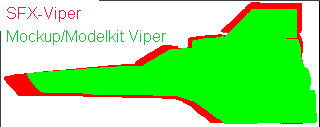
There is a scale difference between the mock-up/model kit Viper and the actual on screen SFX Viper as can be seen in this SFX-mockup overlap.
Starchaser is the name given to Recon Viper 1, a variant of the Colonial Viper.
Amongst its modifications are the Computer, Oral Response Activated system, which is capable of piloting the ship without the need for a human pilot. It is fitted with a second set of pulse generators, thus doubling the speed of the craft, and is able to "outrun anything in the galaxy".
However, these modifications come at a cost: Starchaser has no teeth, as its laser generators had to be removed in order to make room for the pulse generators. As it retains the shape, weight, and size of the regular Viper, Starchaser can continue to make use of the launch tubes.
Its first pilot is Lieutenant Starbuck, who volunteers to use the new variant primarily so that he can dine in the re-opened lounge on Rising Star with Cassiopeia. Believing the mission to be fairly standard, Starbuck does not realize that the first patrol outside the Cyrannus galaxy leads him into discovering a lost Colonial penal asteroid and ambrosa that is nearly a millennium old (TOS: "The Long Patrol").
The design of the sixth-millennium starfighter is extremely similar to that of the Colonial Viper, with the sixth-millennium starfighter fuselage much more squat and featuring two engine turbines rather than three. It, like the Viper, is armed with a pair of laser cannons.
Given Proteus' severance from the Colonies during the Thousand-Yahren War, and the age of Ambrosa at the time Starbuck encounters Robber as numbering 500 yahrens, the model's known service history is more likely than not defined as being within the latter of half of the sixth-millennium.
The Colonial Viper is the primary space superiority fighter and attack craft deployed by the Colonial military. Capable of both atmospheric and long-range spacial flight, the Viper is a single-to-two-pilot craft with two-forward mounted laser-torpedo guns as standard.
The Viper is capable of rapid acceleration in the form of a rapid acceleration feature (called "turbos"), which results in greater fuel usage (1980: "Galactica Discovers Earth, Part I").
An on board compartment accessible through the cockpit contains space suits, which can be used when extra-vehicular activity is necessary (1980: "Spaceball").
The cockpit can jettison the forward half of its fuselage and back half of its engine housing, with the cockpit section becoming an escape pod. This cockpit also includes a parachute for use in atmosphere to slow the descent, as well as survival gear for the pilot, in addition to an active transmitter for rescue operators to home in on (1980: "The Return of Starbuck").
None of the single-seat variants of this craft are seen in use, although they are in many of the special effects scenes in the series—as these scenes are extensively reused from the Original Series.
The Viper is the primary attack/interceptor vehicle in use on the Twelve Colonies with a wide range of both atmospheric and space capable craft dating back to before the First Cylon War.
The history of the Viper can be traced back to before the Cylon war, where propeller powered, and later, jet engine powered Vipers were utilized by colony based air force organizations, prior to the unification of the Colonies.
After the outbreak of the Cylon War, and the unification of the Colonies, the Viper Mk. II became the colony-wide service plane of choice, serving with distinction throughout that conflict. By the end of the war, the Mk. II was being phased out in favor of the Mk. III, however the Mk. II still continued to see action, even up until the Armistice. The Mk. II is later chosen for preservation in the Battlestar Galactica Cylon War Museum, following its decommissioning nearly 40 years since the end of hostilities (TRS: "Miniseries").
A Viper Mk. II and a Mk. VII on patrol (TRS: "33").
By the time of the Fall of the Twelve Colonies, the Viper Mark VII has taken up the mantle of the Mark II. However, due to its advanced construction and computer system, the standard Mark VII is vulnerable to the Cyloncomputer virus. Most of these are destroyed by the Cylons, who break in, and shut the Viper's computers off. A few remain with the fleeing Colonials, only after having their computer systems purged of the offending software (TRS: "Miniseries").
The Viper is designed to operate in both space and atmospheric conditions.
In space flight, the Viper is highly maneuverable, dangerously so in inexperienced hands. Reaction control system (RCS) thrusters for rapid and flexible attitude control, a cluster of 3 main thrusters for high acceleration, and retractable reverse thrusters housed in both port and starboard cowlings for some degree of deceleration can subject the pilot to punishing g-forces. Its retractable landing struts can be magnetized to secure the Viper on metal decks and surfaces in zero gravity.
In atmospheric flight, Vipers consume more Tylium fuel than in the vacuum of space. Once in an atmosphere, the engines must run continuously to maintain sufficient airflow over the wing lifting surfaces. Depending on the composition of the atmosphere itself, this can place severe strain on the Viper's engines (TRS: "You Can't Go Home Again"). In addition to greater fuel consumption, the high wing load (i.e. small wing area relative to weight) may compromise the Viper's overall maneuverability. Because the smaller wing surfaces generate less lift, higher speeds are needed to stay aloft. The fighter's RCS thrusters might partially compensate for this.
Viper cockpits are pressurized and heated, and pilots wear flight suits which, along with a breathing pack housed within the back, provide full life support should ejection be required (TRS: "You Can't Go Home Again)". In atmospheric ejections, the seat jettisons automatically once clear of the Viper, exposing a parachute which is deployed at a safe altitude (TRS: "Act of Contrition", "Razor").
Viper cockpits are also hardened against radiation, including a canopy made of a radiation-resistant glass and is capable of protecting a pilot against radiation levels that would kill a healthy human in 30 seconds (TRS: "Blood and Chrome")
Because of the stamina required to operate Vipers, battlestars have a specialized weight room where the pilots maintain their physical condition.
The Viper Mark II is a single seat fighter aerospace craft used by the Colonial Fleet during the First Cylon War. The fighter served with distinction, proving to be a capable fighting vehicle and winning renown across the Twelve Colonies; the Mark II is regarded as instrumental in ensuring that the Colonials did not lose the original Cylon War [4]. Eventually, the Mark II was succeeded in service by the larger, and more advanced Viper Mark III (Blood & Chrome), in the later years of the War, however, the Mark II was still utilized by the military up to, and for at least two decades following[5], the Armistice(TRS: "Razor Flashbacks" and "Miniseries, Night 1"). Owing to the iconic status that the Mark II achieved during its operational years, a squadron of 40 planes are chosen for preservation in the battlestar Galactica History Museum. These Vipers are later brought back online to defend Galactica, and later its civilian fleet, following the sudden Cylon attack on the Colonies (TRS: "Miniseries").
The Mark II is a long, sleek vehicle with specialized features for zero-g and atmospheric combat, and reconnaissance.
The fore section comprises the nose back to the cockpit. Located there are the forward RCS systems for maneuvering the craft; the forward landing gear; the main avionics and sensor packages and the single-seat cockpit.
The stern comprises the main engines, numerous RCS maneuvering jets, fuel tanks, wings and vertical stabilizer. The wings themselves contain the kinetic energy weapons, their munitions storage and feeds. Mounting points beneath the wings allow missiles, munitions pods and other items to be rack-mounted (TRS: "The Hand of God").
The wing's roots contain the main landing gear, retracted during flight. The Mark II's shape is distinctive because of the offset "intakes" mounted just behind the cockpit. The port / starboard "intakes" incorporate small but powerful reverse thrust engines that can quickly counter a Viper's forward momentum in an emergency (TRS: "The Hand of God").
The Mark II is equipped with a Milso Delta-G Intrepid guidance system. The quad mounted gyroscopic ACRS is hot-linked to the cockpit instrument package and all RCS ports for enhanced performance [6].
As part of its use in the Cylon War, the Mark II was initially designed to resist Cylon attempts at disabling or damaging its flight controls [7]. Given the number of analog gauges and controls, its likely that the Mark II was intended to be flown entirely without computer assistance in fear of compromise by an electronic attack. Nevertheless, a simple computer to manage the flight systems is present in the cockpit, assisting the pilot's Mark One Eyeball. Some gauges, such as the altimeter, are used only in atmospheric flight.
The Mark II is equipped with two 800 rd. Thraxon MEC-A6 30mm Mass Accelerator Cannons (MECS), as its primary weapon. These cannons are capable of firing 20 rounds per second and are augmented with orange tracers, which enable the pilot to see where the rounds are going, and adjust their aim accordingly[6].
These cannons are supplemented with a storage bay capable of holding up to eight Lightning Javelin missiles capable of carrying conventional or up to 50 megatons of nuclear tipped warheads[6].
The Mark II is as "nimble as a jackrabbit," and can rotate 180 degrees vertically in .35 seconds (TRS: "Act of Contrition"). It accelerates at six to seven G's, or 60 to 70 m/s² (TRS: "The Hand of God").
Following the decommissioning of the battlestar Galactica 40 years after the Cylon War ended, and its transformation into a museum, a squadron Mark IIs are chosen for preservation and display on the port flight deck. Following the sudden Cylon attacks, these Vipers are brought back to working order and used to defend the ship as it made its way to Ragnar Anchorage to refit. Eventually, these Vipers are used to defend the 50,000 survivors of the attacks as they flee the Colonies into deep space (TRS: "Miniseries").
They served with distinction up until the end of the Fleet's journey, however not without losses. The few remaining Mark IIs are eventually destroyed after Galactica is flown into a star following the Colonial's settlement of a new world (TRS: "Daybreak, Part II").
↑ 2.02.12.2Dimensions provided by Lee Stringer, one of the VFX Animators of the miniseries. These are for the CGI models, which are based on but not identical to the fullsize props. Source: Starshipbuilder.com forums
↑In flight, without landing gear. Landing gear adds approximately (0.5m)
↑Its iconic status is not unlike that of the real world Supermarine Spitfire, which is held in great esteem in the countries where it served - particularly Great Britain. Many Spitfires are preserved today as museum pieces, just as the Mk. II Vipers were aboard Galactica.
The Mark III retains the same shape and layout as the Mark II, however is slightly larger than the predecessor.[1] It featured a drab grey paint scheme with red accents along the wings and nose, and identification numbers printed along the front side and along the vertical stabilizer.[2]
According to the pre-production script for Blood and Chrome, the Mark III Vipers were specifically designed for special operations missions and were "sleeker planes with bigger wings" compared to standard models.[3] The enhanced wing design was intended for both space combat and ground air support missions, making them suitable for the diverse operational requirements of the Ghost Fleet Offensive and similar special operations.
The Viper Mark III features:
an angular forward fuselage cross section
a revised cockpit canopy featuring rounder edges
more angular side intakes with intake ramps
narrower thrust nozzles
deletion of structures housing the rear undercarriage and reduction of the ventral fairing; all three landing struts retract directly into the main fuselage
two internal missile launchers on the underside
control surfaces for maneuverability in atmosphere
enhanced wing design for ground air support capabilities
The Viper Mark III saw significant service during the secret Ghost Fleet Offensive near the end of the First Cylon War. According to the pre-production script for Blood and Chrome, Mark III Vipers were specifically assigned to special operations units operating from Orion-class stealth ships like Osiris.[4]
These fighters were described as being "loaded for bear" and prepared for atmospheric insertion missions, demonstrating their versatility in both space and planetary environments. The script indicates that approximately ten Mark III Vipers were typically assigned to each special operations mission, suggesting they operated in larger squadrons than the smaller complements seen on regular battlestars.[5]
Mark III Vipers participated in the Battle of Djerba, where their atmospheric capabilities were put to the test against Cylon Raiders that had been modified with adaptive flight systems. The script describes how these Vipers were launched from forward-facing tubes on Orion-class ships, allowing for rapid deployment during combat operations.[6]
During atmospheric combat, the Mark III's enhanced wing design proved crucial for maintaining maneuverability against Cylon forces that had developed their own atmospheric adaptation capabilities. However, the battle also demonstrated the limitations of even advanced Colonial fighters when facing overwhelming numerical odds and adaptive enemy technology.
The pre-production script for Blood and Chrome provides additional technical and operational details about the Mark III that were not included in the final production. The script emphasizes that these fighters were specifically chosen for special operations due to their enhanced capabilities over standard Mark II Vipers.
The Mark III's role in special operations included support for covert missions deep in Cylon-controlled territory, where their atmospheric flight capabilities were essential for planetary operations. The script suggests that the Mark III represented a significant advancement in Colonial fighter technology, bridging the gap between the wartime Mark II and the post-war developments that would lead to the Mark VII.[7]
The fighters were also noted for their integration with the cramped hangar facilities of Orion-class ships, where space constraints required more efficient operations than those possible on full-sized battlestars. This operational requirement influenced both the design and deployment strategies for Mark III squadrons.
The Viper Mark III's control stick appears to be a Logitech Wingman; it should be noted that the cockpit is a reuse of the "wildable cockpit" built for the Re-imagined Series, as no full-size mockup was physically built. The Viper Mark III is entirely a CGI constructwildable cockpit.
The Mark III is similar to an early design for the Mark II Viper made during pre-production of the 2003 Miniseries, which was simplified into the final version to ease the construction of the full-size prop.[8]
The script version of Blood and Chrome provides much more detail about the Mark III's special operations role and atmospheric capabilities than appears in the final production.
↑The exact size is never stated in canon, however, modeler Pierre Drolet lists 10.6 meters long, 6.77 meters wide, and 3.85 meters tall (presumed to include landing gear). These sizes would be too large to fit in series established launch tubes without the tubes themselves being larger as well. The launch tubes are not directly seen in the production, but considering the enlarged hangar bay, it is quite possible that they were, creating yet another series continuity error.
↑In yet another production error, each Viper was a clone of a single model, featuring the same squad and tail numbers - 407, and SF/10 579011, respectively.
3 x forward-firing kinetic energy weapons (KEW), 2 mounted towards the outboard sections of the wings, 1 x mounted in the vertical stabilizer, Weapon hard-points for mounting missiles / munitions pods, etc. under the wings.[2]
Capable of atmospheric flight, the Mark VII is the front-line variant of the Viper design, retaining the Mark II's general layout but adding fully integrated avionics that provide superior battle management and flight information for the pilot.
Ironically, it is this incorporation of new integrated systems that prevents the majority of Mark VIIs from being effective during the Cylon attack: as with the majority of Colonial Fleet, the Mark VIIs suffer fatal computer system failures on contact with Cylon forces. Thanks to a Cylon agent's relationship with Dr. Gaius Baltar, scientist and programmer of the navigation software project, the navigational software in use on board most Colonial Fleet vessels contains back-doors that allow the Cylons to infiltrate a vessel's computers by wireless signals and to disable its power systems. Though this problem can be overcome by removing the navigational upgrade compromised by the Cylons, the information is not discovered in time to benefit the surprised and hard-pressed Colonial forces.
Being a single-seat craft, it mounts three forward-facing kinetic energy weapons (KEW). In addition, it possesses hard-points beneath the wings for mounting missiles, munitions pods and other ordnance (TRS: "The Hand of God").
The Mark VII cockpit is almost totally computerized. There are far fewer analog gauges and more reliance is placed on a powerful central flight computer. This gives the Mark VII pilot far greater control of the fighter as well as, presumably, greater targeting control in a dogfight.
However, the latest and last software upgrade, the CNP upgrade, introduces a fatal flaw (inserted by a Cylon agent) in the Mark VII that leads to the virtual annihilation of most of these fighters in the opening wave of the Cylon attack.
The surviving Mark VII fighters on both Galactica and Pegasus are retrofitted to older avionics packages to replace the compromised CNP and eliminate further infiltration.
As of "Scar", Pegasus has begun to use her on board construction facilities to produce replacement Vipers. Materials mined in an asteroid field allow the production of two full squadrons. Additionally, since Pegasus joined the Fleet, Mark IIs have been steadily phased out in favor of retrofitted Mark VIIs.
The Mark VII's main weapons are three forward-facing cannons, two in the wings and one in the vertical stabilizer. Typically, it is only the wing-mounted cannons that are used.
Like the Mark II, it can also be armed with missiles.
While the Mark II can rotate 180 degrees vertically in .35 seconds (TRS: "Act of Contrition"), it is presumed that the Mark VII has an equal or better performance ratio.
Given that the Mark II is capable of holding its own even against superior numbers of modern Cylon Raiders, the more advanced Mark VII probably also has an equal or superior performance as Raiders in the hands of a capable pilot.
The Viper Mark VII has primary and secondary hydraulics, the secondary system presumably acting as a redundant backup for mission-critical prime system. Damage to both systems does not significantly compromise the Viper's performance as a space combat craft, provided the pilot is sufficiently skilled to manage the changed flight characteristics (TRS: "Scar"). The consequences of the loss of both systems in atmospheric flight would undoubtedly be far more dire.
Since Galactica had only 40 Viper Mark IIs aboard as part of its museum, they needed as many fighters as possible. The remaining Mark VII's advanced computer systems were refitted to resist Cylon infiltration. However, since this is not how the Mark VII was designed to fly, the craft is increasingly more difficult to handle and can only be flown by the most experienced pilots such as Apollo and Kara "Starbuck" Thrace. Galactica had roughly 6-8 Mark VIIs on board after the Cylon attack ("Scattered", "Flight of the Phoenix") [5]. Since the Vipers aboard Pegasus were predominantly Mark VIIs, these too were presumably retrofitted to less vulnerable avionics.
According to David Weddle during the "Scar" podcast the Mark VII cockpit design "was actually laid out based on, I think it's either the F-16 or the F-18." The side-mounted control stick more closely resembles that of the F-16, which is appropriate given the "Viper" nickname of the jet (that was initially the General Dynamics codename for the project, which was in turn named for the TOS Viper).
Also revealed in the podcast for "Scar" is that the full cockpit interior for the Viper Mark VII was built for this episode. "Flight of the Phoenix" had paved the way for the construction of the full cockpit when "the line producers and the production designers figure[d] out ways to move money around that basically bought us this cockpit because we had built the stealth fighter." The cockpit interior may have been constructed at the same time the Blackbird was being built.
Like the Original Series' Viper, the weapons fire of Vipers on the Re-Imagined Series is red, however, the button is on the center of the joystick for the Mark VII, and the left for the Mark II (TRS: "33").
As of "Maelstrom", a new exterior design for the Viper Mk VII is being used. It is characterized by angular air intakes - with three intakes on the ventral side as opposed to the original's single intake - and a compressed forward fuselage with chines extending only partway to the nose. Additionally, the new version possesses a drab gray hue that differs from the original's gunmetal-gray coloration. Due to the fact that all Mark VII fighters seen since "Maelstrom" display the later appearance, it was surmised that this was a retroactive update rather than a variant of an existing ship.
However, this shot taken from "Razor" displays both variants in action. Starbuck's Viper (in the foreground) is of the redesigned variant, while Showboat's Viper (in the back) is the original version - characterized by gunmetal-gray armoring and the sleek forward fuselage. Taking this visual into account, it may be alternatively concluded that these are two versions of Viper (with the newer design perhaps being a product of Pegasus's Viper production facilities). Accepting this conclusion would partly explain why the Mk VIIs present on Galactica's hangar deck bear the original appearance while those seen in action do not - there would no longer be a design conflict between the physical model and the CGI version of the craft. However, for sequences where an actor climbs into the physical model but is subsequently seen flying the new version (as it happens in "Crossroads, Part II" and "He That Believeth in Me" for example) the discrepancy is still present, although these shots show only the cockpit of the Vipers making this less obvious. In Razor and Season 4 both designs do appear onscreen although seldom together. However much of the confusion stems from all of the close up shots being of the Maelstorm design with the original design appearing in many the far out shots.
According to Doug Drexler, "The model was rebuilt by master modeler Pierre Drollet (sic) at Gary’s request. After all the episodes we had done, we learned all of the original models weaknesses, and built it to withstand greater scrutiny, and render more efficiently. Changes were fairly superficial, but improved the lines of the bird." [6]
Overall, between the new engine, cannon, and wing detailing, it can be surmised the update was intended to bring the plane closer to the details of the full-scale prop, which it resembles much more then the detailing in the original CGI model. Only the nose of the full-scale prop was built for the Miniseries, the rest of the plane was built later and very simplified in comparison to the CGI one.
Although nearly all Viper Mark VIIs seen, including those on Caprica before the war, have the same ####NC serial number pattern, in addition to his 48 kill markings, enough of Captain Cole "Stinger" Taylor's can be seen to show that it is marked with one ending in P, possibly intended to be for Pegasus.
↑Very segmented exhaust nozzle design suggest possible thrust-vectoring.
↑ 2.02.1Ammunition used was same as older Viper models; the Mark VII guns appear to have a higher rate of fire. Armaments listings and ejector seat details from David Bassom's Battlestar Galactica: The Official Companion.
↑Dimensions provided by Lee Stringer, one of the VFX Animators of the miniseries. These are for the CGI models, which are based on but not identical to the full size props. Source: Starshipbuilder.com forums
↑In flight, without landing gear. Landing gear adds approximately 0.5m.
↑Information previously available on the SciFi website.
This list was created to keep track of Galactica and Pegasus's Viper complement and includes those active and destroyed, as well as ones with unknown status.
Note that DRADIS designations and tail number designations differ, even if they denote the same Viper, and a DRADIS designation number may have been used on multiple Vipers. DRADIS designations are noted as "DRADIS" in parentheses next to the numeric designation.
Noted on the War Room chalkboard as being Marcia "Showboat" Case's Viper number. Assigned to Primus squadron. May be the tail number to her Mark VII Viper, however definitive confirmation of this is presently unavailable.
↑
Petty Officer Anastasia Dualla announces this Viper's number and several other Viper numbers as each performs a combat landing in the port flight pod as she attempts to verify all pilots that can return to Galactica are aboard before the battlestar escapes from Ragnar and the Cylon ambush.
This article has a separate continuity. This article is in the Richard Hatch continuation separate continuity, which is related to the Original Series. Be sure that your contributions to this article reflect the characters and events specific to this continuity only.
The Colonial Viper is the primary space superiority fighter and attack craft deployed by the Colonial military. Capable of both atmospheric and long-range spatial flight, the Viper is a single-pilot craft with forward-mounted turbolasers as standard weaponry, controlled via the navi-hilt steering column[1].
In the 18 yahrens since the exodus of Man from the Twelve Colonies of Man, Galactica's Viper complement varied significantly. In 7342, Galactica carried a complement of 75 Vipers, with the capacity to launch twenty simultaneously—ten from each of the battlestar's two launch bays[2]. However, hostilities against the Cylons and other enemies dealt a devastating blow to the battlestar's Viper contingent, with numbers depleting to fewer than forty around 7352[2].
In the few yahren that followed this decline, the Fleet discovered a planet rich in the material resources to not only repair and retrofit ships, but also enable the creation of two new Viper classes to restore Galactica's depleted ranks[3] (RH: Armageddon).
Vipers are versatile fighters designed for multiple operational environments:
Spatial Combat: The Viper's primary role is space superiority and attack missions. In the vacuum of space, head-on battles typically end in microns during a single pass, requiring significant force expenditure to re-vector momentum[1]. Colonial Warriors are trained to use themselves as bait to set up enemies for their fellow pilots[1] (RH: Armageddon).
Atmospheric Flight: Vipers are fully capable of atmospheric operations, requiring different skill sets than space combat[4]. Atmospheric flight demands banking, gliding, and compensation for wind gusts and updrafts—challenges absent in space[5]. During the Fleet's long exodus, Viper pilots honed their aerodynamic skills on multiple planets[4] (RH: Paradis).
Positioning and Tactics: In space, victory depends on positioning, with pilots mastering acceleration and deceleration. Pursuit of enemy craft requires mathematical precision equal to weapon control[5]. Atmospheric combat happens faster, demanding enhanced reflexes and different instincts[5] (RH: Paradis).
Vipers utilize pulsar engines powered by refined tylium fuel:
Multiple Pulsars: Standard Vipers feature multiple pulsar engines for propulsion[2].
Apex Pulsar: The primary high-thrust engine mounted on the Viper's rear[6]. When damaged, the apex pulsar can misfire, requiring time to restabilize[6] (RH: Warhawk).
Retro Rockets: Used for delicate maneuvering operations[7].
Gyro-Capacitor: The energy transference system that can be damaged in combat[8][9].
Turbolasers: Forward-mounted laser weapons controlled by the navi-hilt[1]. Pilots can recalibrate turbolasers for full power and beam width[8] (RH: Armageddon).
Targeting Systems: Advanced targeting frames assist in combat[6], though experienced Warriors like Apollo sometimes eschew targeting systems to strafe entire starfields[1].
Shields: Some Viper models feature protective shielding that can deflect tangential hits[10], though direct strikes can penetrate defenses[6].
The Viper's cockpit provides comprehensive information and control:
Navi-Hilt: The steering column that also controls turbolaser fire[1].
Helm: The pilot's helmet features an energy shield that seals the face when donned, plus visual readout (info-scroll) providing sensor readings, scanner reports, and tactical data[11]. The helm also provides commlink capabilities and a rebreather/filter function for breathing in any environment with trace oxygen[12] (RH: Armageddon).
Scanners: Flatscreen and holographic displays showing tactical information, ship schematics, and threat assessment[8].
Computer Systems: Voice-activated on advanced models[8].
Vipers launch through launch tubes from battlestar bays, with the launch aperture—an energy-shielded opening—allowing rapid deployment[13]. Galactica's two fighter bays are each split in half, with the fore section acting as launch bay and the aft section reserved for landing[2] (RH: Armageddon).
The original Viper design from the Twelve Colonies of Man served as the Fleet's primary fighter during and immediately after the Cylon attack. Captain Starbuck refused to transition to newer models, stubbornly flying his "antique" throughout his career. He insisted his vintage Viper had kept him alive and he didn't need "a shiny new toy," though he allowed tech crews to service and update its systems when necessary[12] (RH: Armageddon).
A successor to the original Viper, built on Hephaestus following the discovery of a mineral-rich planetoid in 7352. This version represents a rebuild of earlier Viper models, featuring a new pulsar system with efficient tylium usage, thereby significantly reducing dangerous solium leaks[2]. More than forty Azure-class Vipers were constructed before resources were allocated to its successor[3] (RH: Armageddon).
A successor to the Azure-class, Galactica began building these fighters 18 yahren after "The Hand of God", circa 7360. The Scarlet-class features triple pulsar engines, hover mode capability, energy shields, voice-activated computer systems, and advanced scanner technology[2][14][15]. The first Scarlet Viper was given to Lieutenant Commander Apollo, with a second slated for Captain Starbuck, who refused the upgrade[12] (RH: Armageddon).
An innovative two-pilot design developed at Poseidon under Commander Cain's direction. The Viper Duet consists of two larger Vipers attached at the belly with a long flat weapons module between them that can fire both forward and aft[16].
Key features include:
Dual Pilot Configuration: Both cockpits mounted on gimbals that remain upright during launch and lock into place once internal gravity activates[16].
Tertiary Fuel Supply: The weapons module includes an additional fuel source, allowing extended range by alternating between Vipers' pulsars[16].
Flexible Control: Pilots can share or separate weapons and navigation control, with one pilot able to control rear turbolasers not available on single Vipers[16] (RH: Warhawk).
The Duet's ungainly appearance on its launch track belies its effectiveness as a potent weapon in space combat[16]. Lieutenant Troy and Ensign Dalton flew a Viper Duet during the Battle of Poseidon[17] (RH: Warhawk).
Following more than a decade of near-constant warfare after the Cylon attack, the Fleet finally gained access to mineral resources in 7352[3]. An old freighter was retrofitted as Hephaestus, becoming one of the Fleet's most valued ships for construction and repair[2].
New cadets were trained as Warriors, but required Vipers to fly[2]. The rebuilding effort produced more than forty Azure-class Vipers and eventually led to Scarlet-class development, restoring Galactica's fighter strength[2] (RH: Armageddon).
Viper pilots developed a distinct culture and identity. Being suspended in flight—whether in space or atmosphere—represented life itself for Warriors. The cockpit became a world unto itself, with pilots viewing their craft as more than machines[4]. This attachment was exemplified by Starbuck's refusal to give up his vintage Viper despite technological improvements[12] (RH: Armageddon).
Playfulness in training was considered essential for producing the best fighters, distinguishing Warriors from rigid civilian or Cylon mindsets[5]. Veterans took pride in instructing newcomers through challenging but educational play[5] (RH: Paradis).
This article has a separate continuity. This article is in the Richard Hatch continuation separate continuity, which is related to the Original Series. Be sure that your contributions to this article reflect the characters and events specific to this continuity only.
An actual model of the Scarlet Viper built by Steve Parady.
The Scarlet Viper, also known as the Scarlet-class Viper, is an advanced Colonial Viper introduced in 7360. Built aboard the forge ship Hephaestus, the Scarlet Viper represents a significant technological advancement over both the original Viper design and the intermediate Azure-class Viper[1].
Following the Fleet's discovery of a rich planetoid in 7352, the Colonials gained access to mineral resources needed to build new Vipers and repair existing ships[2]. An old freighter was retrofitted and re-christened Hephaestus, becoming one of the Fleet's most valued ships. Most older Vipers were laboriously rebuilt using a new pulsar system that burned cleaner tylium samples, reducing the risk of solium leaks[1].
More than forty Azure-class Vipers were built before the new Scarlet-class model was developed, with the first Scarlet Viper presented to Lieutenant Commander Apollo[1]. A second was earmarked for Captain Starbuck, who rejected the new ship in favor of his older Viper[3].
At least four additional Scarlet Vipers were in the process of being completed prior to a seditionist bombing that derailed their production[4][5].
The Scarlet Viper is equipped with triple pulsar engines that produce blue-white tylium flame[1]. Unlike earlier Viper classes, the Scarlet-class includes a hover mode capability[6], allowing for delicate maneuvering and stationary positioning in space or atmosphere.
The Scarlet Viper is armed with turbolasers that can be recalibrated for full power and beam width via voice command[7]. The starfighter is equipped with energy shields capable of deflecting tangential laser blasts, though direct hits can penetrate the shields and damage the Viper[8][7].
The Scarlet Viper features several advanced systems:
Scanner Technology: Creates a "laser-constructed three-dimensional image" of destinations[9], displayed via holo-scanner that can show the ship's status and damage in real-time[7].
Voice-Activated Computer: Recognizes voice input for commands[10], likely a successor to C.O.R.A.
Helm Interface: The pilot's helm provides an info-scroll with sensor readings, scanner reports, tactical suggestions, and system warnings[11].
Improved Systems: Enhanced weapons, navigation, and targeting systems compared to earlier models[8].
The Scarlet-class Viper demonstrates superior maneuverability, capable of achieving one hundred-eighty degree tilts[7] and executing precise combat maneuvers at high speeds[12]. The fighter's triple-pulsar configuration provides exceptional acceleration[1].
Apollo receives the first Scarlet Viper in 7360 and uses it for reconnaissance missions, including a fateful journey to the planet Ochoa where he searches for the missing Starbuck[3][10]. During this mission, Apollo encounters new Cylon dark Raiders equipped with quantum shift effect (QSE) technology, which penetrate his Viper's shields and damage the pulsar and gyro-capacitor systems[7].
In a climactic moment during the Battle for the Fleet, Apollo appears to sacrifice himself by flying his Scarlet Viper on a collision course with a Cylon basestar's vulnerable core column. The resulting explosion destroys most of the basestar. However, Apollo reveals he had remote-slaved the Viper's systems and packed it with solonite, piloting it remotely while flying a captured Cylon Raider[13].
In creating his mock trailer for his continuation project, Battlestar Galactica: The Second Coming, Original Series actor Richard Hatch created an upgraded Viper for the project. CGI artist Steve Parady met with Hatch, who was pleased by the conceptual drawing that Parady created. The design for the fighter was inspired by the X-29 test fighter's swept forward wings. The design was seen in the completed mock trailer.
This article has a separate continuity. This article is in the Richard Hatch continuation separate continuity, which is related to the Original Series. Be sure that your contributions to this article reflect the characters and events specific to this continuity only.
The Azure Viper, also known as the Azure-class Viper, is an improved Colonial Viper design introduced following the Fleet's discovery of a mineral-rich planetoid in 7352. Built aboard the forge ship Hephaestus, the Azure-class represents a significant advancement over the original Viper design from the Twelve Colonies of Man, though it would later be superseded by the more advanced Scarlet-class Viper[1].
Following more than a decade of near-constant warfare after the Cylon attack, Galactica's Viper complement had been devastated, with numbers dropping to fewer than forty operational fighters at their lowest point[1]. The discovery of a rich planetoid in 7352 finally provided the Fleet with the mineral resources necessary to rebuild their starfighter forces[2].
A huge old freighter was retrofitted and re-christened Hephaestus, becoming one of the Fleet's most valued ships as both a construction facility and repair bay[1]. Most of the older Vipers were laboriously rebuilt using a new pulsar system that burned cleaner tylium samples, significantly reducing the risk of dangerous solium leaks that had plagued earlier models[1].
More than forty new Azure-class Vipers were constructed before the development of the Scarlet-class Viper[1].
The Azure-class Viper features an improved pulsar propulsion system designed to burn cleaner tylium fuel samples[1]. This advancement dramatically reduces the production of solium, a dangerously explosive byproduct of the tylium refinement process that is also poisonous in gaseous form[3]. The cleaner-burning system makes the Azure-class significantly safer to operate and maintain than earlier Viper models.
The configuration includes:
Multiple pulsar engines for propulsion
Apex pulsar - the primary high-thrust engine mounted on the Viper's rear[4]
Retro rockets for delicate maneuvering operations[5]
Azure-class Vipers are equipped with standard turbolasers controlled via the navi-hilt steering column[7]. The fighters feature advanced targeting systems and scanner technology for combat operations.
The Azure-class is designed for easier maintenance than previous models, with improved access to critical systems. Tech crews can service and update the fighters' systems as needed[8], making them more practical for the Fleet's extended journey through deep space.
The Azure-class entered production in 7352 as part of the Fleet's rebuilding efforts. New cadets were trained as Warriors and added to the ranks of both pilots and infantry, but pilots required Vipers to fly[1]. The Azure-class production run addressed this critical need, providing the Fleet with more than forty new starfighters.
By 7360, Azure-class Vipers formed the backbone of the Colonial Viper squadrons, with Galactica carrying a complement of seventy-five Vipers with the capacity to launch twenty simultaneously - ten from each of the battlestar's two launch bays[1].
Azure-class Vipers saw extensive combat during the Fleet's encounters with Cylon forces and other hostile species throughout their journey. The improved pulsar systems proved reliable in combat, with the reduced solium risk making the fighters safer during extended operations.
While most senior Warriors transitioned to Azure-class Vipers when they became available, Captain Starbuck notably refused to give up his older, original-model Viper even when offered an Azure-class fighter. Starbuck insisted his "antique" had kept him alive and he didn't need "a shiny new toy"[8]. He continued to allow tech crews to service his vintage Viper and update its systems when necessary, but steadfastly refused to transition to newer models, even when the Scarlet-class Viper was later introduced[8].
This attachment demonstrated that despite technological improvements, some pilots developed strong personal connections to their fighters, viewing them almost as living companions in battle.
The Azure-class occupies an intermediate position in Colonial Viper evolution:
Original Viper: The Azure-class represents a significant improvement over the original Colonial Viper design from before the Cylon attack, particularly in its cleaner-burning propulsion system.
Scarlet-class Viper: The Azure-class was eventually superseded by the more advanced Scarlet-class Viper, which featured triple pulsar engines, hover mode capability, energy shields, and voice-activated computer systems[1][9].
Despite being surpassed by the Scarlet-class, Azure Vipers continued to serve as the Fleet's primary fighters throughout 7360 and beyond, forming the majority of operational starfighters in combat squadrons.
The Colonial Viper is the primary space superiority fighter and attack craft deployed by the Colonial military. Capable of both atmospheric and long-range spacial flight, the Viper is a single-pilot craft with two-forward mounted laser-torpedo guns as standard.
The Viper is capable of rapid acceleration in the form of a "turbo boost" feature, which results in greater fuel usage (TOS: "The Living Legend, Part I"). Vipers are also able to abruptly stop forward acceleration by using their reverse thrusters and braking flaps (TOS: "Saga of a Star World").[1]
Vipers are equipped with an onboard computer which contains a warbook, an electronic reference of ships which, in conjunction with scanners, can give the pilot information on a ship (TOS: "Saga of a Star World") and identify whether or not there are life forms onboard the said ship (TOS: "The Living Legend, Part I").
In addition, Vipers' computer is capable of recording messages, which can be played back by Warriors or other persons who happen across an unoccupied Viper (TOS: "Experiment in Terra").
The standard Viper features the distinctive pointed nose design that has become synonymous with Colonial fighter craft. The cockpit is domed and designed to accommodate a single pilot, though it can occasionally fit a wedged-in observer in addition to the primary pilot.[2]
The pilot's seat in a standard Viper is characteristically rock-hard, which fighter pilots consider appropriate for their profession and consistent with the spartian design philosophy of these combat vehicles.[2]
Vipers are launched from battlestars through specialized launch tubes, with pilots experiencing dramatic acceleration as their fighters "plunge down launch tubes."[3] The launch process involves extensive preflight checks conducted by launch personnel, including Chief Warrant Officers who work closely with pilots during preparation phases. Launch CWOs are known to engage in traditional pre-flight rituals with pilots, such as tossing flight helmets to them before boarding their fighters.[2]
Experienced pilots often develop signature moves during pre-flight preparation, such as Lieutenant Starbuck's famous "into-the-cockpit jump," a distinctive maneuver he performs when boarding his Viper.[2]
Landing operations utilize specialized landing beams that guide the returning fighters safely back to their parent ship's landing bays.[4]
Vipers serve as the primary interceptor and escort fighters for the Colonial Fleet. They are organized into squadrons, including the elite Red Squadron, and are deployed to engage Cylon Raiders and other enemy threats.[3] During combat operations, seasoned pilots demonstrate superior survival rates compared to inexperienced cadet pilots, who are particularly vulnerable during their initial engagements with Cylon forces.[5]
The fighters are equipped with laser cannons capable of destroying enemy spacecraft with precise targeting. Experienced pilots like CaptainApollo demonstrate exceptional skill, with Apollo destroying three Cylon Raiders before other pilots could claim their first victory.[6]
On missions where Vipers must endure extreme heat or other environments that could endanger the pilot, specially designed shielding can be applied to the cockpit canopy. This extra layer of protection was used in the Madagon star cluster and prevented pilots from being hurt by the incredible heat and light in the region (TOS: "Saga of a Star World").
According to Encyclopedia Galactica (a non-canonical piece of merchandise published in 1979):
The Colonial Viper is the fastest spacecraft in the known Universe. Its maneuverability, too, is unmatched, enabling a skilled pilot to loop around enemy fire and attack from the blind side. High-energy turbo-lasers are the main Viper weapon. One hit can destroy a Cylon Raider, and a full payload correctly targeted can inflict severe damage on a Baseship.
The Viper's ultra-light drive puts severe stress on the pilots, and in the event of pilot blackout, the Viper can be fully controlled by its on-board Scanner Computer System.
The details of Viper squadron tactics are classified. Their goal, however, is mutual defense. The precision coordination of the best human squadrons is so great that Vipers have commonly taken on Cylon Raiders at four-to-one-odds and emerged victorious. [7]
As the Original Series Viper uses weaponry and features not seen in the Re-imagined Series, its appearance in the museum is more a homage to the Original Series itself than to suggest that these specific Vipers (and their technical abilities) existed in the Re-imagined continuity. However, the Original Series Raider, basestar and landram appear in the Re-imagined Series with updated weaponry. Given their real world status as the original Vipers, the known design of the Mark III and their more 'primitive' design; this model is perhaps erroneously[8] assumed to be the Viper Mark I.
The content in this section is considered separate from the primary continuity (often called "canon"). Be sure that your contributions to this section reflect events specific to the separate continuityexclusively.
These craft are prevalent and are relied on for the defense of the Fleet through the various and divergent continuities offered, starting from Marvel's comics through to the present-day Dynamite Entertainment comic book adaptations.
A newer model Viper variant known as the "Twister" has been developed by the foundry ship. This advanced fighter features a distinctive corkscrew design in its nose section, which gives the variant its nickname among pilots.[9]
Often the Dynamite Entertainment comics will often swap the visualizations of the Original Series' Viper with the Re-imagined Series' Mark II Viper, either in full or in part, including the colorization of the striping (the Re-imagined Series' red versus the Original Series' orange).
A two-seater version of the Viper is seen throughout Galactica 1980. However, despite its appearances in this series, this variant may be hinted at as early on as "Saga of a Star World", when Adama is flown to Caprica in Apollo's Viper after the destruction of the Colonies. However, this variant is never explicitly seen during the Original Series' run.
There is a scale difference between the mock-up/model kit Viper and the actual on screen SFX Viper as can be seen in this SFX-mockup overlap.
This article has a separate continuity. This article is in the Dynamite Comics separate continuity, which is related to the Original Series. Be sure that your contributions to this article reflect the characters and events specific to this continuity only.
Viper
[show/hide spoilers] Spoilers hidden in infobox by default only.
The Colonial Temporal Viper[1] is a modified primary space superiority fighter and attack craft designed by Zee, and deployed by a reluctantly exasperated Commander Adama as a last ditch effort to protect Galactica from a certain demise. Only two were ever modified due to the Fleet's resource scarcity.
As with a standard Viper, it is capable of both atmospheric and long-range spacial flight, capable of operation by a single-pilot, with two-forward mounted laser-torpedo guns as standard, in addition to a temporal weapons package in the form of the temporal warper. The temporal warper has a limitation of ten shots before it requires a recharge from a special temporal battery(Comics: Classic Battlestar Galactica Vol. 2 #1).
This article has a separate continuity. This article is in the Dynamite Comics separate continuity, which is related to the Re-imagined Series. Be sure that your contributions to this article reflect the characters and events specific to this continuity only.
A Viper Gunship.
The Viper Gunship is a two-seater variant of the Colonial Viper that is primarily designed to be a heavy gun platform.[1]
This article has a separate continuity. This article is in the Dynamite Comics separate continuity, which is related to the Re-imagined Series. Be sure that your contributions to this article reflect the characters and events specific to this continuity only.
A Stealth Viper in flight.
The Stealth Viper is a stealth attack craft in the Colonial Fleet during the last year of the Cylon War.
These craft are part of the Argus, a prototype battlestar with new stealth technology, and are assigned to undertake various secret missions into Cylon-occupied space.
Unlike other stealth craft depicted in the Re-imagined Series canon, these craft possess weapons and self-destruct mechanisms, the latter to be used to prevent the ship and its technology from falling into the wrong hands (Battlestar Galactica: Origins 5).
This article has a separate continuity. This article is in the Dynamite Comics separate continuity, which is related to the Original Series. Be sure that your contributions to this article reflect the characters and events specific to this continuity only.
This article has a separate continuity. This article is in the 2003 Video Game separate continuity, which is related to the Original Series and the Re-imagined Series. Be sure that your contributions to this article reflect the characters and events specific to this continuity only.
Viper
[show/hide spoilers] Spoilers hidden in infobox by default only.
Within the 2003 Battlestar Galactica video game, three variants of Viper are available: the Mark I, which is designed to be an earlier version of the original series Viper; the Mark II, which is largely based on the Original Series Viper, and the Mark III, which is described as "superior to the Mark II in every respect". The Mark III is distinctive because of its two-seat cockpit and the lack of the characteristic dorsal fin common to most Viper designs. The Mark III is also known as the Strike Viper. [citation needed]
The 2003 "Battlestar Galactica" video game has its own continuity that uses elements from both the Original Series and the Re-imagined Series. Despite the naming, these fighters should not be considered to be predecessors or successors to the Re-imagined Series' Mark II or Mark VII models.
The Mark III Strike Viper was originally known as the Scorpion Viper. [citation needed]


 A Viper with specially fitted heat shield as it is launched from Galactica in "Saga of a Star World".
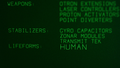 A scan of a Viper, by another Viper, from "The Living Legend, Part I".
 A lone Original Series-style Viper on display next to Viper Mark IIs in the Miniseries.
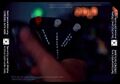 A goof seen in "Saga of a Star World" where the main stick is actually a video camera command stick....
 ...compared to the correct prop stick seen a few seconds earlier.
 A horizontal situation indicator (TOS: "Saga of a Star World").
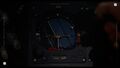 A flight direction indicator (TOS: "Saga of a Star World").


_stick_goof.jpg)
_original_stick.jpg)


.jpg)