


|
For information on a book based on the Original Series universe, see Resurrection (book).
|
|
| |||||


Resurrection is the term that refers to the process wherein the consciousnesses and memories of a Cylon whose body had been destroyed are captured, recovered, and transferred into a new body.
Humanoid Cylon Resurrection
editWhen a humanoid Cylon's body ceases to function, their consciousness can be transmitted (or "downloaded") into a duplicate humanoid Cylon body, one which is empty of consciousness before the download (TRS: "Miniseries").
For resurrection to occur, the dying Cylon must be close to a resurrection ship or hub, otherwise his or her consciousness risks being permanently lost. The transmission method of a Cylon's consciousness has not been explained, but a form of wireless is probable. Resurrection points identified include the Cylon homeworld, the central Resurrection Hub, Resurrection Ships, and planet-based facilities. A rebirthing facility may have existed on occupied Caprica. Within each resurrection point is at least one rebirthing tank, where a duplicate body is immersed in a thick opaque substance to await download (TRS: "Downloaded").
Resurrection affords the Cylons a great tactical advantage in war, as it enables them to carry out suicidal attacks without fear, learn from their deaths to improve their strategy, and fall back to their home base by dying in order to escape capture, nullify a debilitating injury or transmit information. The Cylons are able to sustain themselves as a society indefinitely so long as Resurrection is intact, without having to fear death by natural causes. This fact is especially important in light of the Cylons' difficulties in achieving sexual reproduction.
While humanoid Cylons appear to be able to be resurrected indefinitely, two problems can occur. Repeated downloads can cause pain and other unexplained symptoms. A Cavil reports severe headaches after one resurrection, and a sensation that felt like "a white hot poker in my skull" in a following instance (TRS: "Exodus, Part I"). Far more threatening is if a humanoid Cylon's memories have become compromised, corrupted, or otherwise tainted (from the perspective of other Cylons). If that occurs, the consciousness might be "boxed" immediately after download while the reborn Cylon is in the tank and unable to resist, a drastic measure equivalent in Cylon society to capital punishment. Conversations suggest that this practice is very rare, and Number Three is the only case of an entire model line being boxed (TRS: "Downloaded" and "Rapture").
It is also apparent that the resurrection process is involuntary in that humanoid Cylons cannot choose to die permanently, nor can other Cylons in control of a Resurrection Ship choose to prevent someone from being downloaded. The only way to prevent a dead Cylon from downloading is to move the Resurrection Ship out of range (TRS: "Torn"). An example of this is when Sharon Agathon downloads to a Resurrection Ship to rescue her child. Despite being a traitor, the Cylons do not stop her from resurrecting and she is able to rescue her child as a result (TRS: "Rapture"). Furthermore, Gina Inviere, a Cylon prisoner aboard Pegasus who was tortured so badly she wants to die for good, is unable to control her resurrection. To ensure her permanent death, she supplies the Colonials with information on the Resurrection Ship, so that it can be destroyed (TRS: "Resurrection Ship, Part I").
When a humanoid Cylon is downloaded, his or her memories are added to a collective database and can be accessed by another Cylon of the same model. This is not automatic; the Cylon receiving his or her counterpart's memories must choose to do so (TRS: "The Hub").
The Process of Resurrection
editVery little is known about the mechanics of downloading, other than what can be inferred and comments made from official crew members. Not all Cylons of the same model line share the same knowledge, and thus knowledge is variable between Cylons of the same model line. However, memories are stored upon download and "can be accessed by a curious Cylon who knows how".[1] Hence, the memories of Sharon Agathon were stored when she downloaded to rescue her daughter, and another Number Eight was later able to access them (TRS: "The Hub").
A download usually occurs a short amount of time after death; however, if a great number of Cylons are killed at once, it can take much longer to resurrect them all. After Caprica-Six killed D'Anna Biers, she said that due to the amount of Cylons killed by a bombing, it would take at least 36 hours to even get to Biers. This also indicates that Cylons are resurrected in the order that they are killed, in that it was implied that she was going to be the last to be resurrected.
Downloading also apparently has something to do with the datastream, as when certain Cylons are killed and downloaded into new bodies, their memories are shown flowing in a datastream.
Raider Resurrection
editThe semi-sentient personalities of Raiders also can be retrieved. This allows the Raiders to return to fight with greater tactical awareness (TRS: "Scar").
The Raider known as "Scar" may have been one such Raider to learn master fighting tactics. The Scar personality scores many Colonial kills before its permanent destruction.
Raider resurrection also requires a Resurrection Ship in order to take place.
The Destruction of Resurrection
editShortly after the start of the Cylon Civil War, Resurrection for all Cylons ended with the destruction of the Resurrection Hub. A joint attack on the Cylons' Resurrection Hub, which controls all Resurrection Ships, by Cylon rebels (The Leobens, Sixes and Sharons) and Colonial forces results in the Hub's destruction. As a result, the Cylons lose their ability to download, making them truly mortal for the first time in their history (TRS: "The Hub").
References
edit- ↑ Anders, Charlie James (31 March 2008). i09.com Interview: Jane Espenson Talks About Writing for Firefly and Battlestar—and Gives a Little Secret Cylon Backstory (backup available on Archive.org) (in ). Retrieved on 3 April 2008.
| |||||
Proceed at your own risk if you have not watched through Season 4.
The Development of Resurrection Technology
editResurrection was originally invented on Kobol for humanoid Cylons circa 3000 BCH (-1000BYR) (TRS: "No Exit").
After the departure from Kobol of these humanoid Cylons, the Cylons of Kobol, later known as the Thirteenth Tribe, eventually settled on Earth. During the next thousand years on Earth, the humanoid Cylons gained the ability to procreate in the same manner as humans, complete with childhood.
As a result, resurrection technology was no longer necessary to preserve their species, and the knowledge of it was lost to time.
Reinvention by the Final Five
editApproximately 2000 BCH (0BYR), five Earth Cylons―Saul Tigh, Tory Foster, Samuel Anders, Galen Tyrol and Ellen Tigh―who (like all Cylons by that time) were born naturally, attempted to reinvent resurrection technology, formally known as "organic memory transfer".
A Messenger appeared to each of the five, warning them of an impending holocaust on Earth. The humanoid Cylons had oppressed their version of Centurions and destruction was imminent. Before the holocaust, the five, all researchers in the same research facility, worked around the clock to recreate the technology that was lost. According to Sam Anders' later recollection, the work of Galen Tyrol and Ellen Tigh was exceptional, with Mrs. Tigh making the "intuitive leap" to get the system back online. When the nuclear war came, all five were killed, but they were resurrected on a ship they had prearranged near Earth (TRS: "No Exit" and "Sometimes a Great Notion").
Journey to the Twelve Colonies
editSeeing the utter destruction of Earth and knowing the cause, they were determined that it not happen again. They knew that the humans of the Twelve Colonies would continue trying to create "artificial life" and so they headed in their ship for the Colonies, which had been settled circa 1000 BCH (1000BYR), to warn them not to make the same mistake and to be kind to their creations. However, they only had a ship without FTL—on Earth, the technology had not yet been invented. As a result, travel to the Twelve Colonies was relativistic: on board the ship, travel time was only a few years, but the actual voyage took 2,000 years (TRS: "No Exit").
Near the end of their journey, they somehow made contact with the avatar of the late Zoe Graystone who, with her parents Drs. Daniel and Amanda Graystone, was developing the technology to give Zoe a new human body. The Final Five's assistance sped the Graystones' work,[1] and Zoe-A was resurrected in a tank in her father's home basement laboratory on Caprica.[2]
The Deal to End the First Cylon War
editAfter what the Final Five would have perceived as nearly an instant—but what the Colonies perceived as a few years of peace, the rebellion of the Cylon slave population, and more than twelve years of human-Cylon war—the Five finally arrived, too late to deliver their prophesy and avert the carnage.
The Colonial version of Cylon Centurions had been trying to develop flesh and blood humanoid Cylons just like the Final Five but couldn't get past the Hybrid stage. The Final Five proposed a deal to end the war: if the Centurions stopped their war against humans, the Five would help them perfect humanoid Cylons, complete with resurrection. The Centurions agreed to the deal and ceased the war with the signing of an armistice. The Five and the Centurions then sequestered themselves in a gigantic space complex they called The Colony, where they developed humanoid Cylons and recreated resurrection technology (TRS: "No Exit").
Cavil's Deception of the Final Five
editThe Five downloaded at least once more after their initial download during the nuclear holocaust on Earth circa 2000 BCH (0BYR). The Final Five and the Centurions were successful in recreating humanoid Cylons and resurrection. The first humanoid Cylon created was John Cavil, and he helped the Final Five create the other seven new Cylon models. However, Cavil held a deep grudge against humanity for enslaving his Centurion ancestors. To demonstrate what he viewed as the many faults of mankind, Cavil murdered the Final Five, boxed them, and then ultimately unboxed them but downloaded them with their real memories blocked and false memories in their places. Cavil then proceeded to instigate the attack on the Colonies, apparently expecting the Five to die in the attack (TRS: "No Exit").
It was later revealed that before the Resurrection Hub was destroyed, a Cylon could download as long as they were within range. This also applied to the Final Five. Cavil kept at least one fresh body for each of them, as was proven when Saul Tigh killed Ellen Tigh and she downloaded into a new body. Apparently Cavil planned for them to rejoin the Cylons when they were killed in the attack on the Colonies, hoping that they would admit that they had made a mistake in supporting humanity and see, in Cavil's view, the bestial nature of mankind and join him in humanity's destruction (TRS: "No Exit").
One apparent side effect of resurrection is the restoration of blocked memories: when Ellen Tigh is killed by her husband and downloaded, the memories that Cavil had blocked following her previous download and insertion into Colonial society come back to her shortly after resurrection (TRS: "No Exit").
After the Hub's Destruction
editThe Final Five and the Colony
editThe original equipment that the Final Five used to replicate Resurrection Technology remained on The Colony. Cavil, five months prior to the events of (TRS: "Islanded in a Stream of Stars") and just before the start of the Cylon Civil War, moved The Colony to its present location. The Colony is essentially a planetoid-sized space station constructed along the same principles as the Basestars, with biological elements. This is where Sharon "Boomer" Valerii delivered Hera Agathon to Cavil and his supporters, the Fours and Fives (TRS: "Islanded in a Stream of Stars").
Cavil's Attempt to Rebuild Resurrection
editWhen the Resurrection Hub was destroyed, the Cavil-allied Cylons (Cavils, Dorals and Simons) lost the ability to resurrect. They did not know how to rebuild the technology, as it had been created by the Final Five. Cavil tried to get Ellen Tigh to help rebuild it, but she claimed that she could not do it without Anders, Tyrol, Tory Foster, and her husband Saul Tigh, as she only knew part of the system herself. Cavil scoffed at this and decided to mine Ellen's brain in an attempt to find the information, but Sharon "Boomer" Valerii helped her escape, apparently cutting off the Cylons' only chance at rebuilding the technology (TRS: "Deadlock" and "Someone to Watch Over Me").
However, this "escape" proved to be another deception by John Cavil. He let Ellen Tigh go in an ersatz escape so that Boomer could infiltrate the Fleet and capture Hera Agathon, the human-Cylon hybrid child. Boomer successfully brought Hera back to Cavil at the Cylon Homeworld. Cavil's specific plans for Hera and whether she had anything to do with his plans for resurrection remained unclear, though it was speculated that Cavil had shifted his focus from resurrection to determining how Hera was conceived through Cylon-human natural procreation, seeking this as a potential key to Cylon-Cylon breeding (TRS: "Someone to Watch Over Me", "Islanded in a Stream of Stars" and "Daybreak, Part II").
The Battle of The Colony and Resurrection's Final End
editDuring the Battle of The Colony, Saul Tigh offers to give back Resurrection if Cavil releases Hera (whom he is holding hostage in CIC) and stops pursuing humanity. Cavil agrees and calls off his forces. The Five combine together to recreate the plans for Resurrection and transmit them to The Colony, as each holds a piece of the puzzle. With the Five giving back Resurrection and the deal made with Cavil, it appears that resurrection's return will finally end the war with peace between the sides (TRS: "Daybreak, Part II").
However, as the Five are linked together through the datastream recreating the resurrection technology, Tyrol sees Tory's memories and learns that she killed his wife Cally. He flies into a rage, breaks the download connection, and strangles Tory to death. The download is incomplete and hostilities resume, as the Cylons believe they have been betrayed. The battle ends with the destruction of The Colony and all of Cavil's forces (TRS: "Daybreak, Part II").
With Tory's death at the hands of Tyrol and Anders' death when he pilots Galactica and the rest of the Fleet into Sol, destroying the ships, only three of the Final Five remain. It is likely that the Ones, Fours and Fives, lacking any knowledge to recreate resurrection, succumbed to old age before they were able to recover the technology, assuming any survived the destruction of The Colony (TRS: "Daybreak, Part II").
References
edit- ↑ According to executive producer Kevin Murphy's audio commentary for the episodes "Unvanquished" and "Apotheosis," Zoe's journey to becoming a skin job in the period leading up to the flash forward would have been depicted if Caprica had been given a second season. In that five year period, Zoe would have encountered the Final Five―on their way to the Twelve Colonies following the destruction of Earth by their own version of the Cylons―in the virtual world. There, the Final Five would have assisted Zoe in the creation of her humanoid robotic body. Also according to Murphy, Zoe would have joined the Caprican Legionnaires, working under the command of Jordan Duram to eradicate the Cylon threat before the inevitable uprising. [1]
- ↑ Shown in the "Things to Come" montage at the end of (CAP: "Apotheosis").
|
|
This article discusses the Cylon spacecraft called the Resurrection Ship. For the episodes of the same name, see "Resurrection Ship, Part I" and "Resurrection Ship, Part II".
|
|
| Resurrection Ship | |||
|---|---|---|---|

| |||
| [show/hide spoilers] Spoilers hidden in infobox by default only. | |||
| Race: | Cylon | ||
| Type: | Military | ||
| FTL: | Yes | ||
| Propulsion: | |||
| Crew: | * Humanoid Cylons * Cylon Centurions | ||
| Capacity: | |||
| CO: | {{{co}}} | ||
| XO: | {{{xo}}} | ||
| Role: | Storage Resurrection | ||
| Weapons: | {{{weapons}}} | ||
| Armaments: | None | ||
| Defenses: | None (relies on basestar/raider screen) | ||
| Aircraft: | Unknown | ||
| Aviation facilities: | {{{facilities}}} | ||
| Emblem: | [[File:{{{patch}}}|175px|Ship's patch]] | ||
| Other Images: | Gallery | ||
| Length: | {{{length}}} | ||
| Width: | {{{width}}} | ||
| Height: | {{{height}}} | ||
| Weight: | {{{weight}}} | ||
| Wingspan: | {{{wingspan}}} | ||
| Other: | {{{otherdi}}} | ||
| Cost: | {{{construction}}} | ||
| Construction Time: | {{{construction}}} | ||
| Hull Size: | {{{hull size}}} | ||
| Hull: | {{{hull}}} | ||
| FTL Cooldown: | {{{ftl cooldown}}} turns | ||
| Speed: | {{{speed}}} m/s | ||
| Turn Rate: | {{{turn rate}}}°/turn | ||
| Armor Total: | {{{armor total}}} | ||
| Armor Left: | {{{armor left}}} | ||
| Armor Right: | {{{armor right}}} | ||
| Armor Front: | {{{armor front}}} | ||
| Armor Rear: | {{{armor rear}}} | ||
| Armor Top: | {{{armor top}}} | ||
| Armor Bottom: | {{{armor bottom}}} | ||
| DRADIS Range: | {{{dradis range}}} m | ||
| Processing Power: | {{{processing power}}} | ||
| Munition Slots: | {{{munitions}}} | ||
| Munition Cooldown Period: | {{{munition cooldown}}} turns | ||
| Squadron Slots: | {{{squadrons}}} | ||
| Squadron Size: | {{{squadron size}}} | ||
| Special Abilities: | {{{special abilities}}} | ||
| Additional Information | |||
A Resurrection Ship is a large, slim vessel specifically dedicated to the "resurrection" of humanoid Cylons who are killed or lost to the Cylon fleet (TRS: "Resurrection Ship, Part I").
Design
edit
The Resurrection Ship is a long, slim vessel composed of a large glass facade underneath a large metal superstructure sectioned off into individual frames. Underneath the glass, are stored the extra Cylon bodies the ship carries, maintained by artificial means until its ready for a new "host" consciousness. The aft end of the ship contains a large antenna, the FTL and sublight engines.
The interior matches with the Cylon basestar: Spartan metallic rooms with square, dim, light fixtures placed on the walls and ceilings. The rooms are occupied by rebirthing tanks, in which a spare body is placed, thus beginning the downloading and resurrection process (TRS: "Rapture").
The ship carries no offensive or defensive armaments of any kind, and must rely on the bulk of the Cylon fleet for defense. If left alone, Resurrections Ships are completely vulnerable to even the smallest of attacks to the point that Vipers firing through its windows can destroy it (TRS: "Resurrection Ship, Part I").
While Resurrection Ships perform resurrection duties, its the Resurrection Hub that actually controls resurrection. Destroy that and the Resurrection Ships become useless (TRS: "Guess What's Coming to Dinner," "The Hub").
History
edit
The ship's existence is first discovered by surviving colonials by a Raptor scout detached from the battlestar Pegasus (BS 62) two to three months following the Fall of the Twelve Colonies, after it began tracking a large Cylon fleet jumping to systems with natural resources. Upon further examination, this Cylon fleet was found to be tracking a large Colonial fleet, led by the battlestar Galactica (BS 75). Following a series of internal struggles, the Colonials utilize both battlestars, and attack the Cylon fleet, destroying both basestar escorts and the Resurrection Ship (TRS: "Resurrection Ship, Part II"). Despite the Colonial victory, the celebration is short lived - this Resurrection Ship was just one among many, and while the destruction of the ship put the Cylons on notice, it wasn't long before another was moved up in its place (TRS: "Lay Down Your Burdens, Part II"). Since the Colonial attack, the Cylons allot more basestars to its defense (TRS: "Torn").
Following the outbreak of the Cylon Civil War, all constructed Resurrection Ships fall under the control of John Cavil's loyalist forces. They are hidden out of downloading range when he moves to attack the rebel fleet (TRS: "The Ties That Bind"). One basestar survives, and as retribution, seeks to destroy the main Resurrection Hub - the central control facility that mediates all Resurrection Ships. Without the Hub operational, Resurrection Ships would cease to function. The attack is successful, and Cylon resurrection is destroyed along with the Hub (TRS: "The Hub"). Following the battle, the Resurrection Ships disappear from view, and are presumed to have been staged in a safe location, while the remaining Cylon loyalists attempt to rebuild resurrection technology following the kidnapping of the child Hera Agathon from Galactica's fleet (TRS: "Someone To Watch Over Me"). However, the Colonials strike back at the Cylons, attacking the Colony where Cavil took the child. Galactica is successful in rescuing the child, thus preventing the rebuilding of resurrection technology. By complete chance, the Colony is destroyed shortly after, taking along with it the Cylon's only chances of regaining resurrection abilities. What becomes of the Resurrection Ships after this point, is unknown (TRS: "Daybreak, Part II).
Notes
edit- The Resurrection Ship bears a strong resemblance to the United States Air Force Academy chapel.
- Given that without a Resurrection Ship the Cylons face permanent death even before the Hub's destruction (TRS: "The Hub"), it seems that the Resurrection ships work as a kind of 'booster' for the range of the Resurrection Hub, suggesting that the Hub's effective download range is limited without its accompanying ships. Given that the Hub contains birthing tanks, it acts as a kind of Resurrection Ship itself also.
- Before Baltar briefs Adama and Cain on its true function, Cain speculates that it might be a command ship, while Adama states that it might be a Raider factory. While it is not stated how Raider personalities are resurrected, the caution that the Cylons exhibit after the destruction of the Resurrection Ship suggests that they support the Raiders in some fashion.
|
|
For information on the episode where this ship appears, see "The Hub."
|
|
| Resurrection Hub | |||
|---|---|---|---|

| |||
| [show/hide spoilers] Spoilers hidden in infobox by default only. | |||
| Race: | Cylon | ||
| Type: | |||
| FTL: | Yes | ||
| Propulsion: | |||
| Crew: | |||
| Capacity: | |||
| CO: | {{{co}}} | ||
| XO: | {{{xo}}} | ||
| Role: | Cylon resurrection command & control | ||
| Weapons: | None | ||
| Armaments: | {{{arm}}} | ||
| Defenses: | {{{def}}} | ||
| Aircraft: | {{{aircraft}}} | ||
| Aviation facilities: | {{{facilities}}} | ||
| Emblem: | [[File:{{{patch}}}|175px|Ship's patch]] | ||
| Other Images: | Gallery | ||
| Length: | {{{length}}} | ||
| Width: | {{{width}}} | ||
| Height: | {{{height}}} | ||
| Weight: | {{{weight}}} | ||
| Wingspan: | {{{wingspan}}} | ||
| Other: | {{{otherdi}}} | ||
| Cost: | {{{construction}}} | ||
| Construction Time: | {{{construction}}} | ||
| Hull Size: | {{{hull size}}} | ||
| Hull: | {{{hull}}} | ||
| FTL Cooldown: | {{{ftl cooldown}}} turns | ||
| Speed: | {{{speed}}} m/s | ||
| Turn Rate: | {{{turn rate}}}°/turn | ||
| Armor Total: | {{{armor total}}} | ||
| Armor Left: | {{{armor left}}} | ||
| Armor Right: | {{{armor right}}} | ||
| Armor Front: | {{{armor front}}} | ||
| Armor Rear: | {{{armor rear}}} | ||
| Armor Top: | {{{armor top}}} | ||
| Armor Bottom: | {{{armor bottom}}} | ||
| DRADIS Range: | {{{dradis range}}} m | ||
| Processing Power: | {{{processing power}}} | ||
| Munition Slots: | {{{munitions}}} | ||
| Munition Cooldown Period: | {{{munition cooldown}}} turns | ||
| Squadron Slots: | {{{squadrons}}} | ||
| Squadron Size: | {{{squadron size}}} | ||
| Special Abilities: | {{{special abilities}}} | ||
| Additional Information | |||
The Cylon Resurrection Hub is a space-borne facility that coordinates the resurrection process among all of the Cylon resurrection ships and downloading facilities, with what appears to be a substantial operational range between itself and the rest of the Cylon fleet. It was designed by the Final Five (TRS: "No Exit").
Additionally, the Hub itself functions as a resurrection facility, containing resurrection tanks and a large number of spare bodies. As the control center of all resurrections, it is vital to Cylon society. As a safeguard, the Hub periodically jumps to new locations and relays its position to the baseships' Hybrids once completed. The Resurrection Hub is also where boxed Cylon consciousnesses are stored.
The fact that several Cylons such as Gina Inviere face permanent death in the absence of a Resurrection Ship before the Hub's destruction, suggests that the Resurrection Ships act as a kind of "booster" for the Hub's downloading effect, and the Hub's range and ability to download Cylons' consciousnesses on its own is limited; otherwise, no Cylon would have died permanently before this point. Indeed, after obtaining information from Inviere, Gaius Baltar stated that the Resurrection Ships were created for the purpose of extending the range of the normal downloading process (TRS: "Resurrection Ship, Part I").
At the start of the Cylon Civil War, the Cylon Natalie Faust plans to unbox D'Anna Biers in the hopes of learning the identities of the Final Five (TRS: "The Ties That Bind"). However, the Cavil faction retains possession of the Hub. When Demetrius returns to the Fleet with the renegade baseship, Faust offers Admiral Adama and President Roslin the chance to destroy the Hub in return for their help unboxing D'Anna. Before the plan is carried out, Natalie is shot by Sharon "Athena" Agathon and the basestar jumps after Roslin, determined to get some answers about her visions, has the Hybrid reconnected (TRS: "Guess What's Coming to Dinner?").
The Hybrid follows the Hub, jumping ever closer to it, and eventually catches up. In the ensuing Battle of the Resurrection Hub, an uneasy alliance of Cylons and Colonials attack the Hub, with rebel humanoid Cylon pilots towing powered-down Colonial Vipers behind Heavy Raiders in order to conceal them. Once untethered, the Vipers attack the Hub's FTL drives, stranding it. As the rebel baseship and Heavy Raiders engage the two defending baseships, Karl Agathon and a Number Eight board the Hub to retrieve the restored D'Anna Biers. Once their Raptor clears the Hub, the Vipers fire nuclear missiles, destroying the Hub and at least one of the nearby basestars (TRS: "The Hub").
With the Hub's destruction, the Cylons can no longer resurrect and will know permanent death. Only the Final Five know how the Hub and resurrection work, and with the subsequent deaths of two of the Five, resurrection is lost forever (TRS: "No Exit", "Daybreak, Part I" and "Daybreak, Part II").
Related imagery
edit-
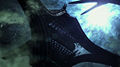 Hiding out in a nebula.
 -
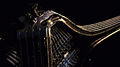 Up close.
 -
 FTL drive.
 -
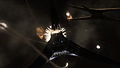 The Hub is hit by Viper-launched nukes...
 -
 ...and takes out a basestar as it blows.
 -
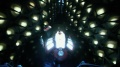
-
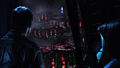 Karl "Helo" Agathon and a Number Eight observe the main resurrection chamber.
 -
 A hallway.


References
edit
| |||
| "Resurrection Ship, Part II" An episode of the Re-imagined Series | |||
|---|---|---|---|
| Episode No. | Season 2, Episode 12 | ||
| Writer(s) | Ronald D. Moore Michael Rymer | ||
| Story by | |||
| Director | Michael Rymer | ||
| Assistant Director | |||
| Special guest(s) | Michelle Forbes as Admiral Cain | ||
| Production No. | 212 | ||
| Nielsen Rating | 1.9 | ||
| US airdate |  2006-01-13 2006-01-13
| ||
| CAN airdate |  2006-04-01 2006-04-01
| ||
| UK airdate |  2006-03-21 2006-03-21
| ||
| DVD release | 19 September 2006 US 28 August 2006 UK | ||
| Population | 49,604 survivors ( ) )
| ||
| Additional Info | |||
| Episode Chronology | |||
| Previous | Next | ||
| Resurrection Ship, Part I | Resurrection Ship, Part II | Epiphanies | |
| Related Information | |||
| Official Summary | |||
| R&D Skit – View | |||
| Podcast Transcript – View | |||
| Deleted Scenes | |||
| [[IMDB:tt{{{imdb}}}|IMDb entry]] | |||
| Listing of props for this episode | |||
| Related Media | |||
| Photo Gallery | @ BW Media | ||
| Promotional Materials | |||
| Online Purchasing | |||
| Amazon: Standard Definition | High Definition | |||
- Galactica and Pegasus engage in an all-out battle to destroy the Cylon Resurrection Ship.
Summary
editTeaser
edit- Lee "Apollo" Adama is floating in a planetary body of water. He sees something approaching him—it is a Cylon Raider with a Viper in hot pursuit, and we return to reality to see Adama floating in space in his ejection seat.
- 48 hours earlier, Kara Thrace asks Lee Adama for backup on her mission to assassinate Admiral Cain. Adama accepts, and reassures Thrace of the importance of trust as he embraces her.
Act 1
edit- Karl "Helo" Agathon and Galen Tyrol are bound and beaten in the brig by upset Pegasus officers, aided again by their Marines, until executive officer Jack Fisk arrives to break it up.
- Helena Cain and Kara Thrace have a drink together, and Cain asks Thrace to promise not to flinch when she has to commit a "terrible sin."
- Lieutenant Lee Adama makes a courier run to Galactica, taking the opportunity to ask his father about Thrace's special mission. Commander Adama is uninterested in discussing the issue, but young Adama is surprised to know that President Roslin is involved in the assassination plot.
- Thrace and Pegasus XO Jack Fisk both prepare for their assassination missions, as well as the attack on the Resurrection Ship.
Act 2
edit
- Before Commander Adama proceeds with his assassination plan on Cain, he solicits advice from the cooperative Cylon captive, Sharon "Athena" Agathon, asking her why the Cylons hate humanity as they do. She reminds him of a portion of his decommissioning speech (TRS: "Miniseries"), asking whether humanity has asked itself if it is deserving to survive despite its failings.
- The Battle of the Resurrection Ship takes place with Galactica and Pegasus circling one basestar which is apparently nearly defenseless without its Raiders and bombarding it with their gun batteries, destroying it before turning their attention to the second.
- During the battle, Lee "Apollo" Adama successfully uses the Blackbird stealth fighter to disable the Resurrection Ship's FTL drive with a missile, but collides with a downed Raptor while distracted. The collision destroys the Blackbird and forces Adama to eject.
- Floating in space, Adama finds that his flight suit has sprung a leak. Communications officer Dualla tries frantically to contact him, but Apollo does not respond by choice.
- As Adama watches, all the Vipers of both battlestars assault the Resurrection Ship, firing their guns through the windows and destroying it.
- On Galactica, Lieutenant Gaeta reports that the surviving Cylons are jumping away, meaning victory for the Colonials.
- Eventually, apparently giving up, Adama releases the last of the air in his flight suit and says, "I'm sorry, Kara," losing consciousness just as a SAR Raptor appears in the nick of time to save him. Margaret "Racetrack" Edmondson manages to revive Adama and reports the good news to Galactica.
- Gaius Baltar's feelings for Number Six transfer to the copy once known as Gina Inviere, who is tangible and more human than his internal Number Six. He repeats to Inviere a story told to him by Six about going to watch pyramid games, finally taking her hands in his as Baltar's internal Six disappears in sadness. As Inviere senses the destruction of the Resurrection Ship, she takes a sidearm from a Marine she kills, with Baltar's help, and asks Baltar to kill her, noting that suicide is a sin. Baltar refuses, gives her the sidearm, and tells her she needs justice, ostensibly referring to Admiral Cain and her tyranny.
Act 3
edit- Commander Adama and Admiral Cain both speak over wireless to conspirators Jack Fisk and Kara Thrace, respectively, but neither commander gives the order to assassinate the other.
- After the battle, Inviere encounters Cain in the her quarters, where Cain is taking off her uniform, and shoots her in the head (this time, with little reluctance). Cain is challenging to the last, unrepentant for the treatment that Inviere has received. Inviere soon disappears from Pegasus, with Baltar's help.
Act 4
edit- At Cain's funeral, Kara Thrace speaks admiringly of her, saying the Fleet would have been safer with her than it is without her. This statement raises a stare from Commander Adama.
- As Lee Adama confides to Thrace that he didn't want to survive the mission, Anastasia Dualla stands outside Adama's quarters eavesdropping, visibly worried about young Adama.
- Commander Adama reports to President Roslin about the failed assassination and their relief over his failure to go through with it. He also reports that Gina has gotten away clean. To his surprise and gratitude, Roslin uses her presidential power to promote him to Rear Admiral, citing that someone with the rank of Admiral commands more than one battlestar and joking about her lack of knowledge of military protocol. Now-Admiral Adama thanks her, admitting he'd long given up on being an Admiral though he never lost hope. Before Billy takes Roslin to bed, he gives her a sweet kiss that leaves both smiling.
- Roslin is now visibly weakened by her fight with cancer, and her composure and strength are failing. Her end appears near.
Notes
edit- Vireem and Gage's beating of Tyrol and Agathon with bars of soap stuffed inside towels used as slings is an homage to the Stanley Kubrick film Full Metal Jacket, in which a similar thing happens to "Pvt. Pyle" in the Marine barracks at night. RDM points this out himself in the podcast. This is known as a "blanket party," where all the members of the squad take part so that the person who is "disciplined" cannot single any one out as the attacker.
- Lee Adama was demoted to lieutenant by Cain when she revoked his flight status. At the beginning of Part I, he is referred to as "Captain," but after Cain mentions that she revoked his flight status, Adama addresses his son as "Lieutenant". The official Scifi.com website was updated the week after this episode aired showing the new ranks of characters--Captain Kara Thrace, Admiral William Adama--but it also was changed to list Lee Adama as a lieutenant.
- Adama's experience of ejecting in the middle of the battle and watching it unfold around him is, according to the podcast, based on the real life experience of Ensign George Gay, sole survivor of his torpedo bomber squadron, during the Battle of Midway. Ens. Gay's plane was shot down and he witnessed the entire battle while floating in the ocean.
- The battle in this episode shares many similarities with the Battle of the Resurrection Hub in "The Hub:" both targets are the main sources of resurrection known at the time, both have two basestars being engaged by the main capital ship the episode takes place on (in that case the Rebel basestar), both have a trick being used on the Cylons, both have the FTL drive of the enemy being targeted and both have the Vipers deliver the final blow, in that case with nuclear missiles presumably supplied by the Cylons and both have at least one enemy basestar destroyed for sure with the other one possibly being destroyed but having an unclear fate. Both also deprive the Cylons of resurrection technology.
- Both Mike Dopud (Gage) and Derek Delost (Vireem) appear uncredited in this episode, having appeared in credited roles in "Pegasus."
Analysis
edit- The beating of Agathon and the Tyrol was edited so that in the teaser, all that is seen is the "Sunshine Boys" entering the cell with their Marines, about to tie the two up while making threatening comments. Given that they were involved in the gang rape of Gina, many viewers left the teaser fearing that far worse was going to happen to Agathon and Tyrol than simply being beaten with soap wrapped in towels.
- The basestar/battlestar battle is epic, although viewers do not see a great deal of it from a play-by-play standpoint. The pairing of an advanced battlestar such as Pegasus with the oldest battlestar, Galactica, likely illustrates why the Cylons used sabotage instead of all-out war to defeat the Twelve Colonies. With proper planning, battlestars working in tandem will obliterate a basestar in a close-range attack, which uses missiles and fighters, but appears to have no gun batteries itself.
- Lee Adama's collision with the downed Raptor occurs partly because Adama is looking behind him, examining the damage he dealt to the Resurrection Ship. This may be symbolic of one of young Adama's character flaws: he is always looking backward, always examining what he has done instead of keeping his attention on the here and now. For example in "Water," where he agonizes over firing on the Olympic Carrier while his father warns him specifically about not second-guessing himself. This theme also parallels Cain's words - which Starbuck echoes at her funeral - about not flinching or second-guessing when terrible things have to be done.
- Obviously, the writers felt that the battle is less important than the events planned immediately after - the mutual attempts by Cain and Adama to kill each other. Viewers enter the battle scene at the stage where the battlestars tackle the destruction of the basestars, although there was a ruse earlier involving the entire Fleet. This quick segue was also likely done in light of the cost for the visual effects, since the shots of the battlestar attacks would be new VFX and therefore expensive.
- The pregnant Sharon Valerii again shows that she has the memories of the 'original' Boomer, which was previously shown in the season opener when she started to tell Starbuck of the time they met. She also displays this in "Home, Part II" where she tells Tyrol she has some of Boomer's memories of him and in "Scar" where she displays some of Boomer's memories of Starbuck to the other's obvious discomfort.
- A new love triangle is formed as Gaius Baltar seems more fixated on the notion of Gina and her pain rather than the feelings of his virtual Number Six, who unsuccessfully pleads him not to aid Gina in killing herself. As he takes Gina's hand, the virtual Six disappears from view in the scene. Perhaps Baltar needed to touch a "real" Six copy, and is also swayed by her "humanity"--her vulnerability and weakness, as well as her differing interpretation on how she thinks God will forgive the Colonials for the destruction of the Cylon fleet.
- In another example of Baltar's ability to multi-task, he relates to Gina as his own the anecdote that Six told him (about purchasing two tickets when she went to see Pyramid games, as the extra ticket permitted her to imagine Gaius watched the game with her). The anecdote serves two conversations at once. The anecdote reinforces his bond with Gina and indicates to Six that flesh-and-blood Gina is of far greater importance to him than (presumably non-corporeal) Six, or the tens of thousands of Cylons who are about to die, permanently, with the destruction of the resurrection ship. Baltar's relationship with Six in the future will likely be a strained one.
- Admiral Adama's affectionate kiss with Laura Roslin, although not necessarily romantic in nature, opens up all kinds of new story possibilities and complications for the characters and the Fleet. It might have been considered by some viewers to be the most surprising part of the whole episode since no information on this scene was noted in advance of the show's airing. As noted by Ron Moore in the podcast commentary, the kiss was improvised by Olmos. Seasons 3 and 4 advance their mutual fondness, as shown in "Unfinished Business" and "The Hub," (where Roslin admits she loves Adama) leading up to a romantic relationship between the two that lasts until Roslin's death when she succumbs to her returned cancer.
- Lee Adama's motivation to die isn't fully explained. One reason could be that he learns that both his father and President Roslin, two of the persons closest to him, sanction the assassination of Cain, thus shattering his world view. But there are probably other factors involved too.
- Although its not clear, Cain's conversation with Thrace about not hesitating when forced to make a terrible choice and her calmness when Thrace was clearly nervous after the battle indicate that Cain may have anticipated Adama's plans and offered advice to Thrace in case she did go through with it as a subtle way of telling her she knew or encouragement of some sort.
- Thrace must have known that her mission to kill Cain would result in her death, as she would be in the middle of Pegasus' CIC, surrounded by armed Marines who would undoubtedly shoot her the instant Cain fell. This suggests that like Lee, she too had briefly lost the will to live.
- Despite her lack of knowledge of military protocol, which she even jokes about, Laura Roslin knows enough that Adama must be an Admiral to command two battlestars and promotes him to that rank. This also shows that in Colonial society, the President possesses the power to promote military officers, at least in lieu of higher ranking officers able to do so. It may also have been done so that the Pegasus crew would acknowledge Adama's authority over them. As Roslin seemed confused by the fact that Admiral Cain was now senior officer in "Pegasus," the fact that Adama now needed to be an Admiral may have been something she learned because of Cain's presence in the fleet and not prior knowledge.
- Adama tells President Roslin that he had long given up on becoming an Admiral despite never losing hope of attaining that rank. Given his long and distinguished history in the Colonial fleet, this may have been due to politics, especially given the incident with Bulldog and the Valkyrie which was damaging to his career as shown in "Hero."
Questions
editAnswered
edit- Subsequent to Inviere's killing of Cain, Gina disappears from Pegasus and Colonial military imprisonment (as promised by Baltar). Where is she being hidden? (Answer)
- Is Lee Adama becoming depressed and unable to command his pilots? (Answer)
- How will Adama deal with the mob-level brutality that appears throughout Pegasus? (Answer)
- How will Kara Thrace's comments at Cain's funeral affect her relationship with now-Admiral Adama? (Answer)
- Will another Blackbird be constructed? (Answer)
- Will these agents be more careful in what they do, knowing that resurrection is no longer possible? (Answer)
- Will Adama stay aboard Galactica now that he's been promoted? (Answer)
- Are there going to be any other promotions? (Answer)
- Who will become the CAG of Galactica as Kara "Starbuck" Thrace and Apollo were assigned to Pegasus at the time Admiral Cain was assassinated? (Answer)
- What changes in the Cylon strategy will we see, now that the Resurrection Ship has been destroyed? (Answer #1, Answer #2)
- In "Resistance," Baltar forces Boomer into revealing that eight Cylons are still in the Fleet. However, this obviously does not take into account the introduction of Pegasus. Thus, are there any more Cylon agents aboard Pegasus? If so, what do they number? (Answer)
Unanswered
edit- Why doesn't Cain issue the order for Adama's execution? Is it a change of heart or does she suspect that her life was in jeopardy by Thrace?
- Baltar hands Gina a weapon in the ante-room of the Pegasus brig. Wouldn't a high-security area be equipped with surveillance cameras? Has Baltar disappeared as well?
- Viewers only see one basestar destroyed. Is the other destroyed as well, or is it able to jump away with the surviving Raiders and support ships?
- How many new Viper squadrons and pilots have been added to the Fleet?
- How closely have the Cylons studied the memories of Boomer aboard Galactica, and the other spies in the Fleet?
Official Statements
editGage was such an asshole, for lack of a better term. He was, he just didn't care... Specialist Gage was a guy that looked after himself. That's all he cared about. [He didn't care] about anything else. And that's the way I approached him, and I think it was right. That was the tone, and that was what was necessary from Gage.
Tahmoh and Aaron were great. We have such a wonderful community in Vancouver as far as actors, and very giving actors. So whenever you get a chance to work with these guys, these people, it's amazing.
Noteworthy Dialogue
edit After the rescue of Helo and Tyrol by Fisk.
Jack Fisk: I don't want your thanks. I owe Lieutenant Thorne my life, as do many people on this ship.
Helo: He was trying to rape a prisoner!
Fisk: You can't "rape" a machine, Lieutenant.
Sharon responds to Adama's question on survival.It's what you said at the ceremony before the attack, when Galactica was being decommissioned. You gave a speech, it sounded like it wasn't the one you prepared. You said that humanity was a flawed creation, and that people still kill one another for petty jealousy and greed. You said that humanity never asked itself why it deserved to survive. Maybe you don't.
Helena Cain: I know you're very close with Adama.
Kara Thrace: Yes, sir.
Cain: And I know he's a good man. And I know he's had to make some very hard choices over the last few months. Lord knows I have.
Thrace: Well, then maybe you can understand why he did what he thought he had to do when you said you were going to execute Helo and Tyrol.
Cain: Let me tell you something. I've had to watch a lot of kids be put into body bags. They're covered with flags and they float out that airlock. You think I don't understand his feelings towards his men? Sometimes terrible things have to be done. Inevitably, each and every one of us will have to face a moment where we have to commit that horrible sin. And if we flinch in that moment, if we hesitate for one second, if we let our conscience get in the way, you know what happens? There are more kids in those body bags. More kids floating out that airlock. I don't know why, but I have a lot of faith in you. And I want you to promise me that when that moment comes you won't flinch. Do not flinch.
Speaking to Starbuck over wireless.I've been thinking about what we talked about before. It's not enough to survive. One has to be worthy of surviving. That's all.
Before Gina's escape.In Cain's quarters after Gina's escape.Gina (confronting Cain with a gun): Tell me, Admiral. Can you roll over? Beg?
Helena Cain: Frak you.
Gina (right before shooting): You're not my type.
Kara's eulogy at Admiral Cain's funeral.I, um, only knew Admiral Cain for a short time, so what I have to say about her will be short. She faced things. She looked them right in the eye and she didn't flinch. That's something that we do a lot around here. We second-guess. We worry. When I think about what she went through after the attack—all alone, one ship, no help, no hope—she didn't give up. She didn't worry. She didn't second-guess. She acted. She did what she thought needed to be done, and the Pegasus survived. Might be hard to admit, or hard to hear, but I think that we were safer with her...than we are without.
Kara talks to Lee after his rescue.Kara Thrace: Lee. Lee, you okay? Are you okay?
Lee Adama: No, not really. Um...I broke my word to you.
Thrace: What are you talking about?
Adama: I let you down. I wasn't there when you needed me.
Thrace: Look, a close call like that? That'd mess with anybody's head. Alright? You know, it turns out I didn't need you anyway, so... Let's just be glad that we both came back alive, alright?
Adama: That's just it, Kara. I didn't want to make it back alive.
Laura discusses Adama's new job after Cain's funeral.Laura Roslin: Rumor has it that I know very little about military protocol, but I do believe that someone who commands more than one ship is called an admiral. Congratulations, Admiral Adama.
William Adama: Thank you, Madame President. Thank you, Billy. I um, never gave up hope, I just stopped trying to get these a long time ago.
Roslin: Just goes to show you, Bill. Never give up hope.
Adama: Same goes for you, Laura.
Cast
edit- Michael Hogan as Colonel Saul Tigh
- Aaron Douglas as Chief Galen Tyrol
- Tahmoh Penikett as Lt. Karl "Helo" Agathon
- Paul Campbell as Billy Keikeya
- Alessandro Juliani as Lt. Felix Gaeta
- Kandyse McClure as Petty Officer Anastasia Dualla
- Graham Beckel as Colonel Jack Fisk
- Luciana Carro as Lt. Louanne "Kat" Katraine
- Vincent Gale as Chief Peter Laird
- Peter-John Prinsloo as Lt. Mei "Freaker" Firelli
- Brad Dryborough as Louis Hoshi
- Mike Dopud as Specialist Gage (uncredited)
- Derek Delost as Specialist Vireem (uncredited)
- Nels Lennarson as Pegasus Brig Marine (uncredited)
References
editCommentary and Interviews
edit- ↑ 152: Mike Dopud, Actor, Multiple SG Roles (Interview) (backup available on Archive.org) (in English). Dial the Gate (2022-11-26). Retrieved on 2026-05-17.
- ↑ 152: Mike Dopud, Actor, Multiple SG Roles (Interview) (backup available on Archive.org) (in English). Dial the Gate (2022-11-26). Retrieved on 2026-05-17.

